

Hey there! As a supplier of Tripper Conveyors, I often get asked about the noise level of these machines. It's a crucial factor, especially for those looking to install them in various industrial settings. So, let's dive right into it and explore what the noise level of a Tripper Conveyor is all about.
First off, what exactly is a Tripper Conveyor? Well, it's a type of conveyor system that's used to distribute materials along the length of the conveyor. It can move back and forth, dropping material at different points as needed. These conveyors are super handy in industries like mining, agriculture, and manufacturing.

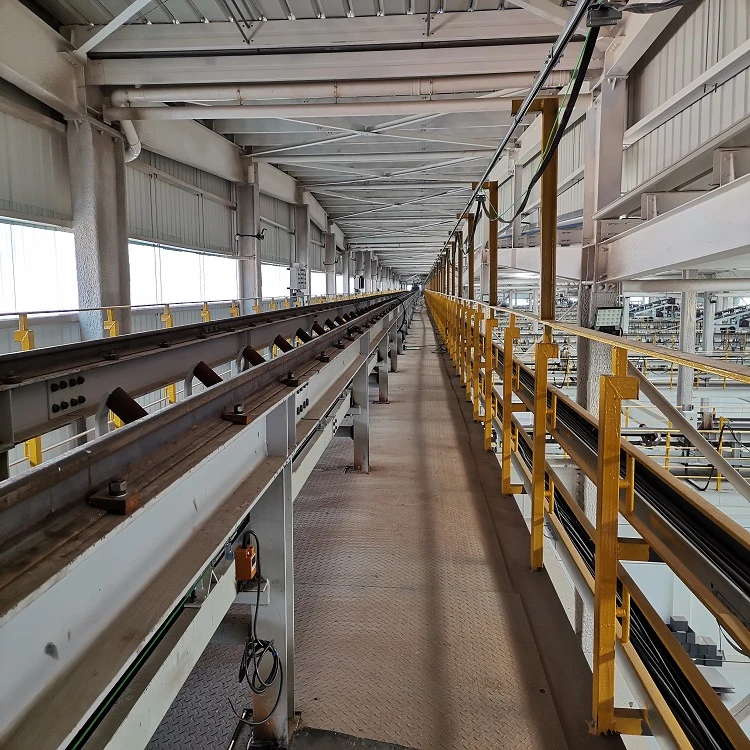
Now, let's talk about the noise. The noise level of a Tripper Conveyor can vary quite a bit depending on several factors. One of the main factors is the design and construction of the conveyor itself. For instance, if the conveyor has high - quality bearings and well - lubricated moving parts, it's likely to produce less noise. On the other hand, a conveyor with worn - out components or poor alignment can be quite noisy.
The speed at which the Tripper Conveyor operates also plays a big role. Generally, the faster the conveyor moves, the more noise it will generate. This is because the increased speed leads to more friction between the moving parts and the materials being transported. For example, if you're using the conveyor to move heavy and abrasive materials at a high speed, the noise can be quite significant.
Another factor is the environment in which the Tripper Conveyor is installed. If it's placed in an open area with plenty of space for sound to disperse, the perceived noise level might be lower. However, if it's installed in a confined space like a small warehouse or a basement, the noise can bounce off the walls and seem much louder.
Let's get into some numbers. In a typical industrial setting, the noise level of a Tripper Conveyor can range from around 70 decibels (dB) to 90 dB. To put that into perspective, normal conversation is around 60 dB, and a lawnmower is about 90 dB. So, a Tripper Conveyor can be as noisy as a lawnmower if it's operating under certain conditions.
If the noise level gets too high, it can have several negative impacts. For workers, prolonged exposure to high - level noise can cause hearing loss. It can also be a source of annoyance and distraction, which might affect productivity. In addition, high - noise levels can lead to complaints from neighbors if the conveyor is located near residential areas.
So, what can be done to reduce the noise level of a Tripper Conveyor? One option is to use noise - reducing materials in the construction of the conveyor. For example, using rubber or other damping materials on the moving parts can help absorb some of the vibrations and reduce noise. Another approach is to install sound - proof enclosures around the conveyor. These enclosures can trap the noise inside and prevent it from spreading to the surrounding area.
Proper maintenance is also key. Regularly checking and replacing worn - out parts, ensuring proper alignment, and keeping the conveyor well - lubricated can all help keep the noise level down.
Now, I want to mention some related products that might be of interest to you. If you're in the market for a conveyor system, you might want to check out our Truck Loading Conveyor. It's a great option for loading materials onto trucks efficiently. We also have Belt Conveyor and Roller Conveyor which are widely used in different industries. And if you need a conveyor with a specific type of idler, our Roller Idler Conveyor could be the right choice.
If you're interested in our Tripper Conveyors or any of our other conveyor products, I encourage you to reach out to us. We can provide you with more detailed information about the noise levels, performance, and pricing. Whether you're a small - scale business or a large industrial enterprise, we have the right conveyor solution for you.
In conclusion, understanding the noise level of a Tripper Conveyor is important for both the well - being of your workers and the smooth operation of your business. By taking the right steps to control the noise, you can create a more comfortable and productive work environment. So, don't hesitate to contact us if you have any questions or if you're ready to make a purchase.
References
- Industrial Noise Control Handbook
- Conveyor System Design and Maintenance Manual


