


Conveyor Roller Bracket
Your Professional Conveyor Roller Bracket Manufacturer!
Cangzhou Hongpeng Conveying Machinery Manufacturing Co., Ltd. has a professional conveying machinery design studio. All engineering projects are designed using CAD to ensure that customers are provided with a full range of high-quality products and services from design, manufacturing to on-site installation, commissioning and after-sales service. Our company is a professional manufacturer of various belt conveyors such as TD75, DTII, DTII (A), SSJ, DSJ, DTC, DTL, corrugated large-angle, DY mobile, and various metallurgical and mining machinery.
-
 Conveyor Belt SupportConveyor belt support holds roller groups below the belt and keeps the carrying path stable.Add to Inquiry
 -
 Conveyor Support LegsSteel conveyor support legs carry the conveyor frame and keep the belt line at the required height.Add to Inquiry
 -
 Conveyor Roller StandAdjustable conveyor roller stand supports roller sets and helps keep belt tracking at the correct line.Add to Inquiry
 -
 Conveyor Roller Bracket FrameHigh-Rigidity, Robust StructureResists bending and deformation under heavy loadsModular design for quick installation and disassemblyAdd to Inquiry
 -
 Conveyor Roller Brackets Used for Mine IndustriesConveyor Roller Brackets Used for Mine Industries are conveyor belt support components designed for heavy-duty mining conditions. They are used to fix and adjust the position of rollers, withstandAdd to Inquiry
 -
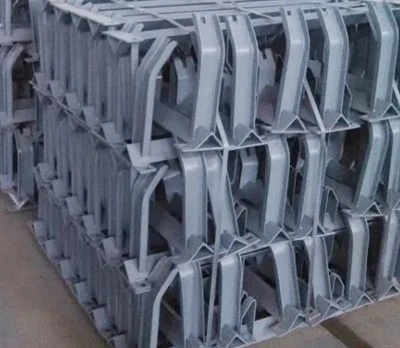 Belt Conveyor Roller Bracket FrameWelded assembly using thick steel plates; resistant to deformation under heavy loadsPrecision jig-welded construction; prevents belt mistrackingHeavy-duty anti-corrosion coating; rust-resistant inAdd to Inquiry
 -
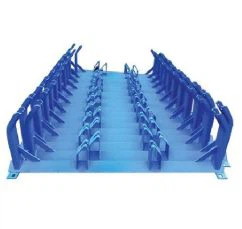 Conveyor Roller BracketsRoller brackets are structural components mounted on the conveyor frame to position and support the rollers, maintain spacing, and withstand operational loads and impacts. They are adjustable toAdd to Inquiry
 -
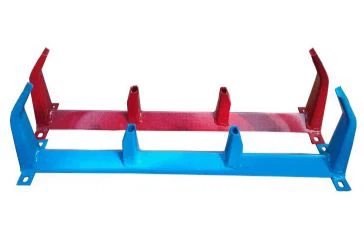 Conveyor Roller Mounting BracketsConveyor roller mounting brackets are core connectors used to accurately fix and support rollers in conveyor systems. They are usually assembled into modular units with racks and rollers, whichAdd to Inquiry
 -
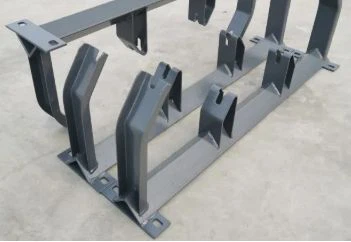 Conveyor Return Roller BracketSpecialized support for the return strand; prevents sagging and misalignmentHigh-strength materials; compatible with self-aligning rollersV-shaped design prevents derailment; standard mounting holeAdd to Inquiry
 -
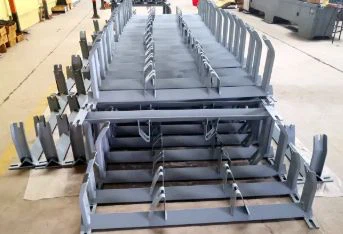 Conveyor Belt Roller BracketThe conveyor belt roller bracket is mainly designed as the core support component of the belt conveyor system, which is used to fix and adjust the load/return rollers.Add to Inquiry
 -
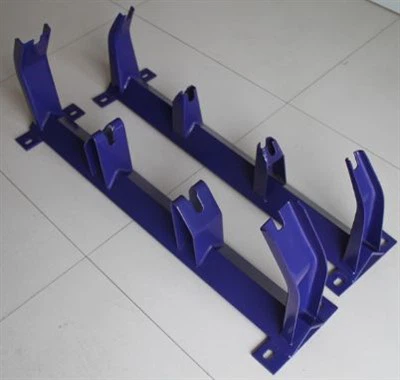 Conveyor Idler Roller BracketThe conveyor idler roller bracket is the core fixing device of the belt conveyor system. The roller bracket is mainly used to stably install various types of roller assemblies.Add to Inquiry


Why Choose Us
High Quality
We maintain a rigorous control process from raw material testing to finished product shipment, and our products are ISO9001 and CE certified.We adhere to technological innovation and continuously optimize product performance, striving to provide more reliable and efficient conveyor machinery parts to customers worldwide.
Advanced Equipment
Our company utilizes advanced CNC machining centers, laser calibration equipment, and automated production lines to ensure micron-level precision in core components such as rollers and drums, meeting the stringent requirements of heavy industries such as mining, port, and metallurgy.
Production Market
Our company has been supplying belt conveyors, rollers, drums, roller supports and other products to more than 130 coal mines, mining and other well-known enterprises for a long time, with annual sales exceeding 100 million yuan.
Our Services
Our company provides long-term warranty service for the products we sell. During the warranty period, we will repair equipment and replace parts for customers free of charge. Outside the warranty period, the company will still provide customers with high-quality after-sales service at preferential prices to ensure the continuous and stable operation of the equipment.
Specifications
|
Product Name |
Conveyor Roller Bracket Frame |
|
Application |
Conveyor Belt System for Industries of Coal, Mine, Cement, Power Plant, Mining, Aggregate, Sand, Grain, Port etc |
|
Material |
Carbon Steel, Galvanized Steel, etc. |
|
Angle |
0, 20, 30, 35, 40, and 45 degrees. |
|
Types |
Troughed roller bracket, flat roller bracket, self aligning roller bracket, etc. |
|
OEM/ODM |
Yes |
|
Color |
OEM(Yellow, White, Gray, Blue, Red, etc) |
|
Packing |
Wooden Carton |
|
Standard |
DIN, CEMA, JIS, AS, SANS, SABS, GOST, AFNOR etc. |
|
Roller Diameter |
As required from customers. |
|
Belt Width |
450-2400mm, as customized. |
Advantages of Conveyor Roller Bracket
Stable structure and strong bearing capacity
Conveyor roller brackets are known for their high strength and stability. Brackets made of high-quality steel or aluminum alloy can withstand high-load operation, ensuring that the conveyor belt remains stable during long-term work and reducing the risk of vibration and deviation. This stability not only extends the service life of the equipment, but also reduces maintenance costs, and is particularly suitable for industrial environments with continuous operation.
Strong adaptability to meet diverse needs
Another notable feature of conveyor roller bracket is their strong adaptability, which can be customized according to different conveying environments and material characteristics. In addition, the size and shape of the bracket can also be adjusted according to the length, width and inclination angle of the conveyor to adapt to different installation spaces and conveying requirements.
Easy installation and low maintenance cost
The design of modern conveyor roller bracket focuses on easy installation, and many products adopt modular structures for quick assembly and disassembly. This not only shortens the installation time of the equipment, but also reduces labor costs. At the same time, the maintenance of the bracket is relatively simple. Only regular inspection of fasteners and connection parts is required to ensure long-term stable operation and reduce downtime and maintenance costs.
Material Handling:
In warehouses, distribution centers, and factories, conveyor roller brackets are used on conveyor systems to handle boxes, crates, and other products. Items move smoothly along the rollers, reducing friction and making transport efficient. These brackets support rollers that are part of the conveyors, which allow for easy movement of stuff from one place to another within a facility.
Packaging Line:
Roller brackets are used on conveyors to move containers, bottles, cans, and packs of products in. In this scenario, the brackets support rollers that facilitate the movement of things through different stages of packing. This makes sorting and arranging packages ready for shipment faster.
Sorting System:
Conveyor roller brackets are used in sorting systems that move items based on size, weight, or destination. The brackets support rollers that drive the belts, enabling fast and accurate sorting of packages in warehouses or airports where luggage needs to be sorted quickly.
Automated Warehouse:
Automated storage systems use conveyor rollers with brackets for seamless retrieval and storage of goods. This type of automation conveys items to different storage locations when needed and brings them back later. The conveyors make it easier to move things around within an automated warehouse.
Airport Baggage Handling:
In airports, luggage handling systems use conveyor rollers with bracket supports for efficient processing of bags. Roller brackets help move bags through check-in, transfer, and arrival sections. They ensure that bags are handled properly so that passengers can get their luggage on time upon arrival at their destination airport.
Food Processing:
Conveyor roller brackets are also used in the food processing industry. Foods such as fruits, vegetables, meat, fish, etc., are cleaned, cut, packed, or sorted using these machines. Roller brackets support the rollers on the conveyor belt, which move the food items from one point to another during processing.
Mining and Mineral Processing:
Material handling is done using conveyor systems with roller brackets in mining operations, for instance, transporting mined ores or aggregates. The brackets support rollers that transport large, heavy materials like rocks efficiently within a mine site.
Recycling Facility:
Conveyor roller brackets are used in sorting and separating waste materials. Used products pass along rollers to be categorized into different types, such as plastics, metals, paper, etc., for further processing. The brackets support the rollers that move the waste items through the sorting process.
Types of Conveyor Roller Bracket
Fixed brackets
This type of roller brackets consists of a fixed structure that holds the rollers in place without allowing for adjustment. They are used in conveyor systems where belt height does not vary frequently, or where adjustment is not required.
Adjustable brackets
Adjustable brackets allow the height of the rollers to be adjusted to suit fluctuations in the conveying system. This optimizes conveyor efficiency and minimizes belt and roller wear.
Brackets with shock absorbers
These brackets are equipped with special devices to dampen shocks, vibrations and noise caused by the passage of materials on the conveyor belt.
Self-aligning brackets
These brackets automatically correct roller alignment according to web position. Proper alignment is essential to prevent belt misalignment and optimize conveyor performance.
Maintenance of Conveyor Roller Bracket
Regular Inspection:
● Structural Integrity
Regularly inspect the frame for signs of wear, corrosion, or damage. Pay particular attention to welds, joints, and areas prone to stress.
● Alignment and Leveling
Check the frame for proper alignment and leveling. Misaligned or uneven frames can lead to belt tracking issues and uneven wear.
Preventative Measures for Corrosion:
● Rust and Corrosion Prevention
In environments prone to moisture or chemical exposure, inspect frames for rust and corrosion. Apply protective coatings as needed and consider using corrosion-resistant materials in high-risk areas.
● Cleaning
Regularly clean the frame to remove debris, dirt, and corrosive substances that can accelerate wear.
Tighten and Secure All Fasteners:
Regularly check and tighten bolts, nuts, and other fastening components. Vibrations from the conveyor system can loosen these over time.
Lubrication of Moving Parts:
If the frame includes moving parts or components, ensure they are properly lubricated according to the manufacturer’s recommendations.
Adjustments and Replacements:
Make adjustments to any components attached to the frame, such as idlers or brackets, to ensure they are functioning correctly. Replace any parts that are excessively worn or damaged.
Environmental Considerations:
Take into account the operating environment. For example, in outdoor or harsh industrial settings, more frequent inspections and maintenance may be necessary.
Regular Cleaning:
Keep the frame free from material build-up, which can cause misalignment or imbalance in the conveyor belt.
Monitoring Load Capacity:
Ensure that the conveyor system is not regularly overloaded, as this can cause excessive stress and potential damage to the frame.
Packaging and Shipping


FAQ
We're professional conveyor roller bracket manufacturers and suppliers in China, specialized in providing high quality custom service. We warmly welcome you to buy conveyor roller bracket for sale here from our factory. For price consultation, contact us.
Conveyor Idler Roller Bracket, Conveyor Bracket Frame Used for Mining, Heavy Duty Conveyor Roller Frame Bracket