

Hey there! As a supplier of Transition Idlers, I often get asked about the rotational resistance of these crucial components. So, let's dive right in and break down what rotational resistance of a Transition Idler really means.
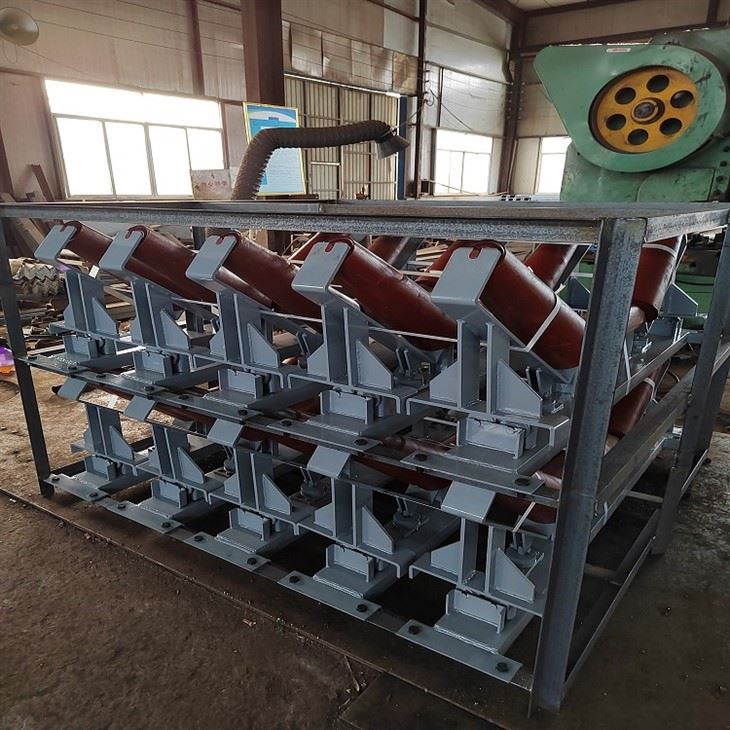
First off, what's a Transition Idler? Well, it's a key part in conveyor systems. These idlers are placed at the transition areas of a conveyor, where the belt changes its shape from flat to troughed or vice versa. They help to support the conveyor belt and ensure a smooth transition, reducing stress on the belt and other components.
Now, onto the main topic - rotational resistance. Rotational resistance refers to the force that opposes the rotation of the idler. In simple terms, it's the amount of effort needed to make the idler spin. A low rotational resistance is generally desirable in a Transition Idler. Why? Because when the idler can rotate easily, it reduces the energy consumption of the conveyor system. Think of it like a well - oiled machine. If all the parts move smoothly, less energy is wasted in getting them to work.
There are several factors that can affect the rotational resistance of a Transition Idler. One of the most significant factors is the quality of the bearings. Bearings are like the heart of the idler, allowing it to rotate. High - quality bearings with proper lubrication will have less friction, which means lower rotational resistance. On the other hand, if the bearings are of poor quality or not properly maintained, they can cause the idler to spin with more difficulty, increasing the rotational resistance.
Another factor is the sealing of the idler. A good seal prevents dust, dirt, and moisture from entering the idler. If these contaminants get inside, they can damage the bearings and increase friction, thus raising the rotational resistance. For example, in a mining environment where there's a lot of dust, a well - sealed Transition Idler will perform much better than one with a sub - standard seal.
The design of the idler also plays a role. The shape and material of the idler shell can affect how it interacts with the conveyor belt. A well - designed idler will have a smooth surface that reduces the drag between the belt and the idler, contributing to lower rotational resistance.
As a Transition Idler supplier, we take these factors very seriously. We use only the best - quality bearings in our idlers. Our bearings are carefully selected for their low - friction properties and durability. We also pay close attention to the sealing of our idlers. We use advanced sealing technologies to ensure that our idlers are protected from the elements and contaminants.
When it comes to the design, our engineers work hard to create idlers that are optimized for low rotational resistance. We test our idlers rigorously in our state - of - the - art testing facilities to make sure they meet the highest standards.
So, why is low rotational resistance so important for your conveyor system? Well, as I mentioned earlier, it reduces energy consumption. In today's world, where energy costs are constantly rising, this can lead to significant savings over the long term. A conveyor system with low - resistance idlers will run more efficiently, which means less wear and tear on the belt and other components. This, in turn, reduces maintenance costs and downtime.
If you're in the market for high - quality Transition Idlers, you should definitely consider our products. We offer a wide range of Conveyor Idler Pulley and Conveyor Roller Idler options to suit different conveyor system requirements. Our Idlers and Rollers are known for their reliability and performance.
We understand that every conveyor system is unique, and we're here to help you find the perfect Transition Idler for your needs. Whether you're in the mining, agriculture, or manufacturing industry, we have the expertise and products to support you.
If you have any questions about the rotational resistance of our Transition Idlers or want to discuss your specific requirements, don't hesitate to reach out. We're always happy to have a chat and help you make the best decision for your conveyor system. Contact us today to start a discussion about how our Transition Idlers can improve the efficiency and performance of your conveyor system.
References

- Conveyor Handbook, various industry - specific editions
- Technical papers on conveyor system efficiency and idler performance


