

Hey there! I'm a supplier of Belt Conveyor Drums, and today I want to dig into a super important topic: how the diameter of a belt conveyor drum affects its performance. This is something that can make or break the efficiency of your conveyor system, so let's get right into it.
First off, let's talk about the basics. A belt conveyor drum is a crucial part of any conveyor system. It's responsible for driving the conveyor belt, and its diameter plays a huge role in how well the whole setup works. You might be wondering, "Why does the diameter matter so much?" Well, it affects a bunch of different factors, like belt tension, speed, and the overall load - carrying capacity of the conveyor.
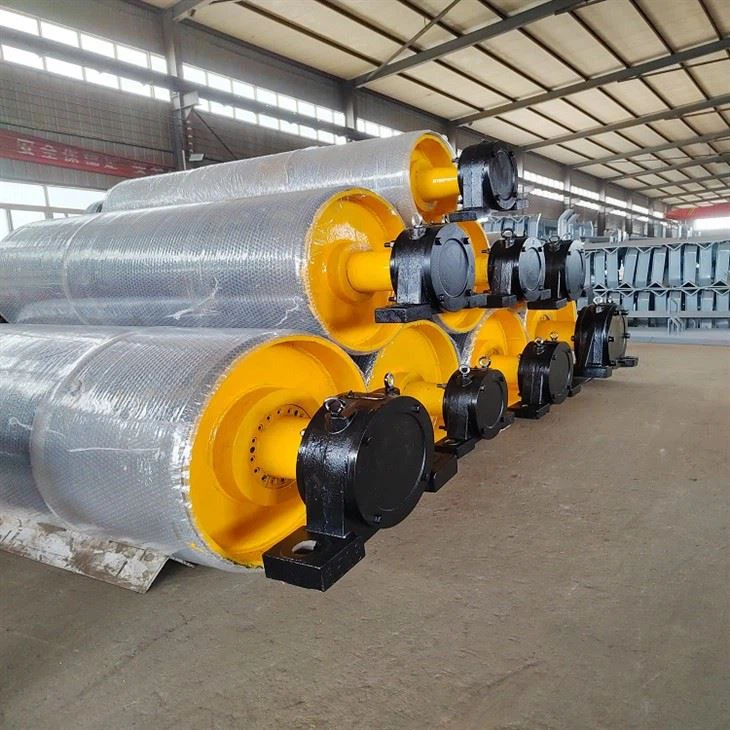

Belt Tension
One of the most significant ways the drum diameter impacts performance is through belt tension. When you have a smaller - diameter drum, the belt has to bend more sharply around it. This sharp bend increases the stress on the belt, which in turn raises the belt tension. High belt tension can lead to a whole host of problems. For starters, it puts more wear and tear on the belt itself. The belt has to work harder to go around the small drum, and over time, this can cause premature cracking and fraying. You'll end up replacing the belt more often, which means more downtime and higher costs for your operation.
On the other hand, a larger - diameter drum allows the belt to bend more gradually. This reduces the stress on the belt, resulting in lower belt tension. With lower tension, the belt lasts longer, and there's less risk of it breaking or coming off the drum. It also means that the motor doesn't have to work as hard to drive the belt, which can save you on energy costs. So, if you're looking to extend the life of your conveyor belt and cut down on energy consumption, a larger - diameter drum is the way to go.
Conveyor Speed
The diameter of the drum also has a direct impact on the speed of the conveyor. The relationship between drum diameter, rotational speed, and belt speed is pretty straightforward. The formula for calculating belt speed is (V=\pi\times D\times N), where (V) is the belt speed, (D) is the drum diameter, and (N) is the rotational speed of the drum.
If you keep the rotational speed of the drum constant, increasing the diameter will increase the belt speed. This can be really useful if you need to move materials quickly. For example, in a high - volume manufacturing plant, a faster conveyor can help you meet production targets more efficiently. However, you need to be careful. Increasing the speed too much can also cause problems. If the speed is too high, the materials on the conveyor might bounce or fall off, especially if they're small or lightweight.
Conversely, a smaller - diameter drum will result in a slower belt speed. This can be beneficial in situations where you need to handle delicate materials or perform precise operations. For instance, in a food processing plant, a slower conveyor might be necessary to ensure that the products are handled gently and don't get damaged.
Load - Carrying Capacity
Another key aspect affected by the drum diameter is the load - carrying capacity of the conveyor. A larger - diameter drum can distribute the weight of the load more evenly across the belt. When the load is spread out, there's less stress on any one part of the belt, which means the conveyor can handle heavier loads without overloading the belt or the drum.
In contrast, a smaller - diameter drum concentrates the load in a smaller area. This can lead to excessive stress on the belt and the drum, especially when carrying heavy loads. If the stress is too high, it can cause the drum to warp or the belt to break. So, if you're dealing with heavy - duty applications, like mining or construction, a larger - diameter drum is essential to ensure the conveyor can handle the load safely and efficiently.
Choosing the Right Drum Diameter
Now that we've seen how the drum diameter affects performance, how do you choose the right one for your conveyor system? Well, it depends on a few factors.
First, think about the type of materials you're transporting. If you're dealing with heavy, large - sized materials, you'll probably need a larger - diameter drum to handle the load. For light, small - sized materials, a smaller - diameter drum might be sufficient.
Next, consider the required conveyor speed. If you need a fast - moving conveyor, a larger - diameter drum can help you achieve that. But if you need a slower, more precise operation, a smaller - diameter drum could be the better choice.
Also, take into account the available space in your facility. Sometimes, you might be limited by the physical space where the conveyor will be installed. In that case, you'll need to find a balance between the ideal drum diameter and the space constraints.
Related Products
If you're interested in exploring more options for your conveyor system, we have some great products to offer. Check out our Variable Speed Drive Pulley. This pulley allows you to adjust the speed of your conveyor easily, giving you more control over your operation.
We also have the Conveyor Belt Head Drum. This is an essential part of the conveyor system, and it's designed to provide reliable performance and long - lasting durability.
And for those looking for a complete solution, our Drum Conveyor is a great option. It's a versatile and efficient way to transport materials in your facility.
Conclusion
In conclusion, the diameter of a belt conveyor drum has a significant impact on its performance. It affects belt tension, conveyor speed, and load - carrying capacity. By choosing the right drum diameter, you can improve the efficiency of your conveyor system, extend the life of your belt, and save on energy and maintenance costs.
If you're in the market for a belt conveyor drum or have any questions about how to choose the right one for your needs, don't hesitate to reach out. We're here to help you find the perfect solution for your operation. Whether you're a small business or a large - scale enterprise, we have the expertise and products to meet your requirements. Let's start a conversation and see how we can make your conveyor system work better for you.
References
- Conveyor Belt Handbook, published by a leading industry association.
- Engineering studies on belt conveyor performance and drum design.


