

A conveyor head pulley is a crucial component in conveyor systems, playing a central role in the efficient and reliable operation of material handling processes. As a leading supplier of conveyor head pulleys, we have in - depth knowledge of how these pulleys work and the value they bring to various industries. In this blog, we will explore the working principle of a conveyor head pulley, its significance, and related aspects.
The Basics of a Conveyor Head Pulley
A conveyor head pulley is typically located at the discharge end of a conveyor belt. It is responsible for driving the conveyor belt, which in turn moves the materials along the conveyor system. The pulley is usually powered by an electric motor through a drive mechanism, such as a gearbox or a direct - drive system.
The head pulley is designed with a specific diameter, width, and surface finish. The diameter of the pulley affects the belt tension and the amount of torque required to drive the belt. A larger diameter pulley generally requires less torque to achieve the same belt speed, which can be beneficial for reducing energy consumption and wear on the drive components. The width of the pulley is determined by the width of the conveyor belt, ensuring proper alignment and support of the belt.
The surface finish of the head pulley is also important. It can be smooth, grooved, or lagged. A smooth surface is suitable for applications where the belt does not require high traction. Grooved pulleys are used to improve belt tracking and prevent slippage, especially in applications with high - speed or heavy - load conveyors. Lagged pulleys have a rubber or other friction - enhancing material applied to the surface, which significantly increases the friction between the pulley and the belt. This is essential in applications where the conveyor needs to handle heavy loads or operate at high inclinations.
How a Conveyor Head Pulley Works
The working process of a conveyor head pulley can be broken down into several key steps:
Power Transmission
The first step is power transmission from the motor to the head pulley. The electric motor generates rotational energy, which is then transferred to the pulley through a drive system. In a typical setup, the motor is connected to a gearbox, which reduces the speed of the motor and increases the torque. The output shaft of the gearbox is then connected to the head pulley, causing it to rotate.
Belt Engagement
As the head pulley rotates, it engages with the conveyor belt. The friction between the pulley surface and the belt is what allows the pulley to drive the belt forward. When the pulley starts to turn, the frictional force between the two surfaces causes the belt to move in the same direction as the rotation of the pulley.
Material Movement
The moving conveyor belt then transports the materials placed on it. The materials are loaded onto the belt at the loading end of the conveyor and are carried along the length of the belt until they reach the discharge end, where they are unloaded. The speed of the belt, which is determined by the rotational speed of the head pulley, can be adjusted according to the requirements of the material handling process.
Belt Tension and Tracking
Maintaining proper belt tension and tracking is crucial for the efficient operation of the conveyor system. The head pulley plays a significant role in this regard. The tension in the belt is adjusted by using tensioning devices, such as take - up units. The head pulley, along with other pulleys in the system, helps to distribute the tension evenly across the belt.
In terms of tracking, the design of the head pulley, such as the use of grooves or lagging, can help to keep the belt centered on the pulley. If the belt starts to drift to one side, the grooves or the increased friction provided by the lagging can guide the belt back to the correct position.
Significance of a Conveyor Head Pulley
The conveyor head pulley is of great significance in conveyor systems for several reasons:
Driving Force
It is the primary source of the driving force for the conveyor belt. Without a properly functioning head pulley, the conveyor belt would not be able to move, and the material handling process would come to a halt.
Efficiency
A well - designed and maintained head pulley can improve the efficiency of the conveyor system. By reducing slippage and ensuring proper belt tension and tracking, the head pulley helps to minimize energy losses and increase the throughput of the conveyor.
Durability
The quality of the head pulley affects the overall durability of the conveyor system. A high - quality head pulley made from robust materials and with a proper surface finish can withstand the harsh operating conditions, such as high loads, abrasion, and corrosion, resulting in a longer service life and reduced maintenance costs.
Related Pulley Types
In addition to the head pulley, there are other types of pulleys used in conveyor systems. For example, the Bend Pulley and Snub Pulley change the direction of the conveyor belt and increase the wrap angle around the drive pulley, respectively. A bend pulley is used to redirect the belt, often at a 90 - degree or 180 - degree angle, while a snub pulley helps to increase the frictional grip between the belt and the drive pulley.
Another type is the Variable Speed Drive Pulley. This pulley allows for the adjustment of the belt speed during the operation of the conveyor system. It is useful in applications where the material flow rate needs to be changed according to the production requirements.
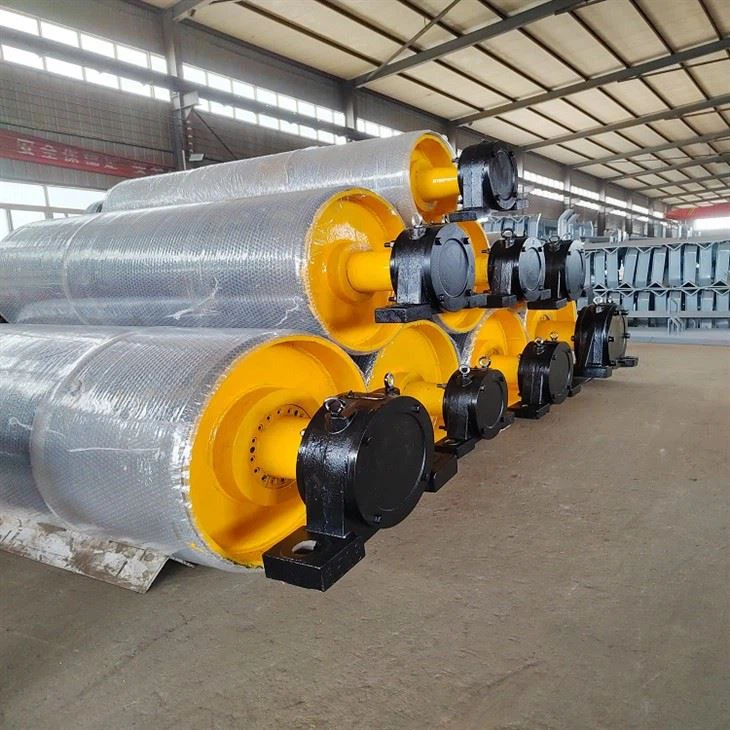

Contact Us for Your Conveyor Head Pulley Needs
If you are in the market for high - quality conveyor head pulleys or any related conveyor components, we are your go - to supplier. Our extensive experience and expertise in the field enable us to provide you with top - notch products that meet the highest industry standards. We offer a wide range of head pulleys with different specifications, including various diameters, widths, and surface finishes, to suit your specific application requirements.
Whether you need a standard head pulley or a custom - designed one, we can cater to your needs. Our dedicated team of professionals is ready to assist you in selecting the right pulley for your conveyor system and providing you with all the necessary technical support. If you have any questions or would like to start a procurement discussion, please feel free to reach out to us.
References
- Conveyor Belt Handbook, third edition. Manufacturer XYZ, 2019.
- Principles of Material Handling, author ABC, Publisher DEF, 2020.
- Industrial Conveyor Systems Design and Analysis, edited by GHI, Publishing Company JKL, 2018.


